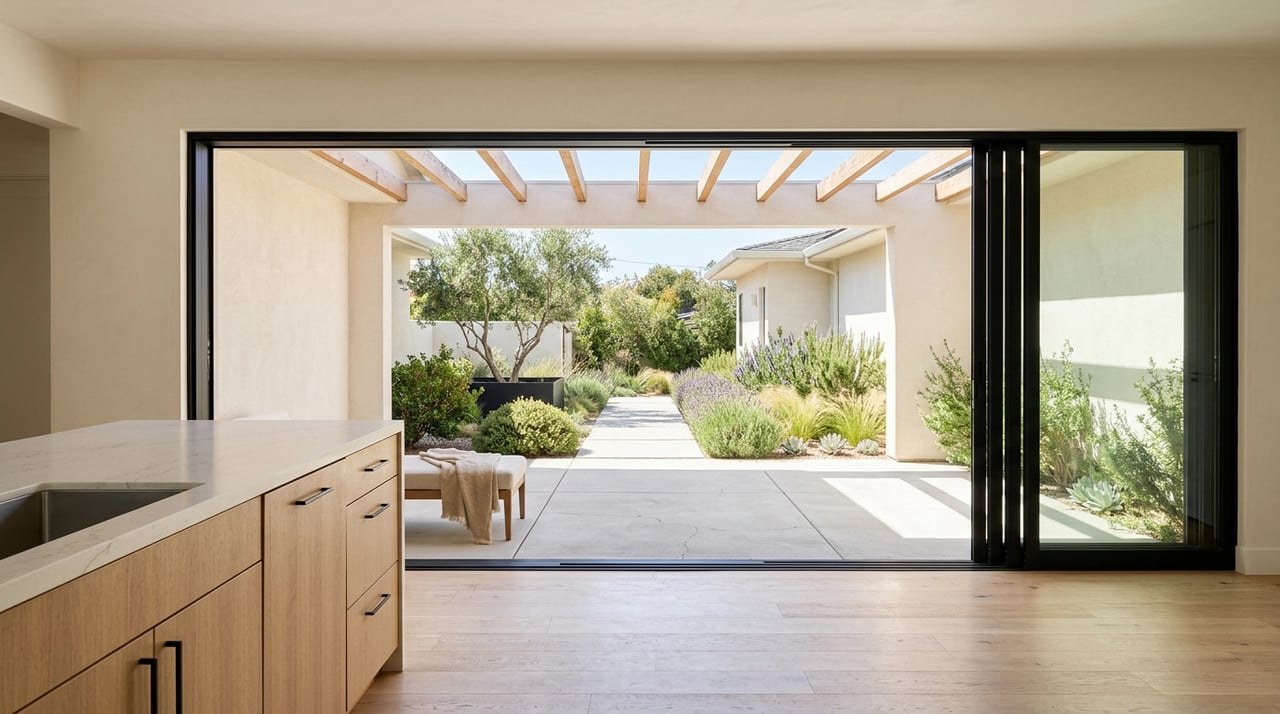
What does wine country living actually feel like when it is not a weekend getaway? In Carmel Valley, everyday life is less about rushing from stop to stop and more about settling into a quieter rhythm with open space, local gathering spots, and easy access to the outdoors. If you are wondering whether Carmel Valley fits the way you want to live, this guide will help you understand the daily pace, practical tradeoffs, and homeownership realities that matter most. Let’s dive in.
Carmel Valley lifestyle at a glance
Carmel Valley is best understood as a low-density valley community rather than a compact town center. Monterey County’s Carmel Valley Master Plan emphasizes preserving rural character, scenic views, open space, watershed protection, and the overall landscape, while focusing more intense development near established commercial areas.
That planning framework shapes how the area feels day to day. You get room, scenery, and a slower pace, but not the convenience density of a highly walkable downtown. For many buyers, that balance is exactly the appeal.
Wine country is part of daily life
Carmel Valley’s wine-country identity is not just a marketing phrase. It is an officially recognized American Viticultural Area, with federal recognition tied to the area’s distinct climate, watershed, soils, and marine influence.
In practical terms, that means tasting rooms and local wine culture are woven into the community. You are not driving into a themed destination for the experience. In many ways, the wine-country setting is simply part of the backdrop of everyday living here.
Outdoor access feels built in
If you like a lifestyle that gets you outside often, Carmel Valley offers a strong foundation. Garland Ranch Regional Park is a major local anchor, with public access and activities that include hiking, horseback riding, jogging, walking, bird watching, and limited mountain biking.
The setting is also varied enough to keep regular outings interesting. According to the park district, Garland Ranch includes river, canyon, oak woodland, chaparral, and redwood environments, so you have a broad mix of scenery close to home.
Garland Ranch supports everyday use
One reason Garland Ranch stands out is how practical it is for regular use. Public access does not require a permit, and the park includes a visitor center, making it approachable whether you are heading out for a quick walk or a longer weekend hike.
That matters when you are evaluating daily quality of life. Outdoor access is more valuable when it is easy to fold into a normal Tuesday, not just an occasional special outing.
Palo Corona expands the network
Carmel Valley’s open-space access goes well beyond one park. Palo Corona Regional Park includes 4,585 acres of public open space and habitat, and its development plan notes connections to ten other parks and preserves.
Those connections include places such as Carmel River State Beach, Point Lobos State Reserve, Garrapata State Park, Santa Lucia Preserve conservation lands, and the Ventana Wilderness. For you as a buyer, that points to a broad outdoor network that supports an outside-first lifestyle.
Daily errands are manageable, but selective
Carmel Valley does offer local options for basic routines. Jerome’s Carmel Valley Market describes itself as a neighborhood grocery with produce, meats, seafood, deli offerings, and a broad beverage selection, while Carmel Valley Creamery operates a coffee shop and mini épicerie in the village community center.
That local core helps with quick needs and gives the valley a community-centered feel. You can handle some day-to-day stops close to home instead of leaving the valley for every small errand.
Bigger shopping usually means leaving the valley
At the same time, Carmel Valley is intentionally limited in its retail footprint. For more extensive shopping and service needs, many residents look to nearby peninsula commercial areas.
The Barnyard Shopping Village has more than 50 merchants and small businesses. Crossroads Carmel includes stores such as Safeway, CVS, and Carmel Ace Hardware, while Del Monte Center includes larger retailers like Whole Foods Market, Macy’s, Apple, Sephora, and CVS.
Transportation is mostly car-oriented
Your daily routine in Carmel Valley will likely be shaped by driving. Monterey-Salinas Transit Route 24 serves the Crossroads Carmel to Carmel Valley corridor, but the broader land-use pattern still points to a car-reliant lifestyle beyond the village core.
This is an important expectation to set early. If you want dense retail, frequent transit, and a long list of walkable conveniences, Carmel Valley may feel too spread out. If you value space, quiet, and a more rural rhythm, the tradeoff may feel well worth it.
What buyers should know about homes here
Carmel Valley can be a rewarding place to own property, but it often requires a more hands-on mindset than neighborhoods with standard urban utilities. In unincorporated Monterey County, many properties are served by individual onsite septic systems rather than centralized sewer service.
Monterey County’s guidance notes that a comprehensive site and soil evaluation is essential for designing an onsite wastewater treatment system. For buyers, that means due diligence around septic records, inspections, and site conditions should move high on the priority list.
Wells and lot conditions can affect planning
Water service and lot requirements can also matter in ways some buyers do not expect. Monterey County states that if sewage disposal is or will be by an onsite waste disposal system and the lot can be served by a water system, the property must be at least 2.5 acres to obtain a construction permit.
This does not apply the same way to every transaction, but it is a good example of why Carmel Valley properties should be approached carefully. A home here may be better understood as a systems property, where septic, water, site conditions, and permitting history all deserve close review.
Wildfire awareness is part of ownership
Wildfire preparedness is another practical part of living near open space. The Monterey Peninsula Regional Park District states that fuel management and wildfire preparedness are critical to protecting parklands and nearby communities.
If you are considering a home on a larger parcel or close to natural open space, it helps to think maintenance-first. Vegetation management, access, and overall fire awareness are part of responsible ownership in this setting.
Who Carmel Valley fits best
Carmel Valley tends to appeal to buyers who want a quieter and more spread-out environment. If you value scenic surroundings, open land, wine-country character, and nearby trail access, the area offers a lifestyle that feels distinct from more retail-dense parts of the Monterey Peninsula.
It may be especially attractive if you do not need a highly walkable downtown to enjoy where you live. Many people are happy to trade convenience density for breathing room, a slower daily pace, and a stronger connection to the landscape.
How to think about the tradeoffs
No community is a perfect fit for everyone, and Carmel Valley is no exception. Its strengths and tradeoffs are closely linked, which is why it helps to evaluate the area through your real daily habits rather than through vacation-day expectations.
Here is a simple way to frame it:
| Carmel Valley Strengths | Carmel Valley Tradeoffs |
|---|---|
| Official wine-country setting | Limited convenience retail in the valley |
| Strong trail and park access | Car-oriented daily rhythm |
| Rural character and scenic open space | More property-system due diligence |
| Slower pace and room to spread out | Maintenance can be more involved |
When you look at it this way, the decision becomes clearer. The right fit is less about whether Carmel Valley is objectively better and more about whether its rhythm lines up with how you want to live.
A grounded way to buy in Carmel Valley
If Carmel Valley is on your shortlist, it helps to go in with both excitement and structure. The lifestyle can be special, but the smartest buyers stay focused on the practical side too, especially when reviewing property systems, access, upkeep, and long-term fit.
That kind of steady approach can help you enjoy the upside without getting surprised by avoidable issues. Carmel Valley rewards buyers who appreciate the setting and are ready for the responsibilities that come with it.
If you are thinking about buying or selling in Carmel Valley, a calm, well-planned strategy can make the process much clearer. Mark Cohan can help you evaluate the lifestyle, the property details, and the steps that matter so you can move forward with confidence.
FAQs
What is everyday life like in Carmel Valley?
- Everyday life in Carmel Valley is typically quieter, more spread out, and more car-oriented than in denser Monterey Peninsula areas, with a strong connection to open space, wine-country surroundings, and a slower pace.
Does Carmel Valley have local shopping and groceries?
- Carmel Valley has some local options for daily needs, including a neighborhood grocery and coffee shop, but many larger errands and retail trips still extend to nearby peninsula shopping areas.
Is Carmel Valley good for hiking and outdoor access?
- Carmel Valley offers strong outdoor access through places like Garland Ranch Regional Park and the broader Palo Corona Regional Park network, which supports regular hiking, walking, and other outdoor activities.
What should Carmel Valley home buyers check first?
- Carmel Valley buyers should pay close attention to septic records, well status, site and soil conditions, and other property-system details that may be especially important in unincorporated Monterey County.
Are Carmel Valley homes more maintenance-heavy?
- Some Carmel Valley homes can require a more maintenance-forward approach, especially properties on larger parcels or near open space where septic systems, land care, and wildfire preparedness may play a bigger role.
