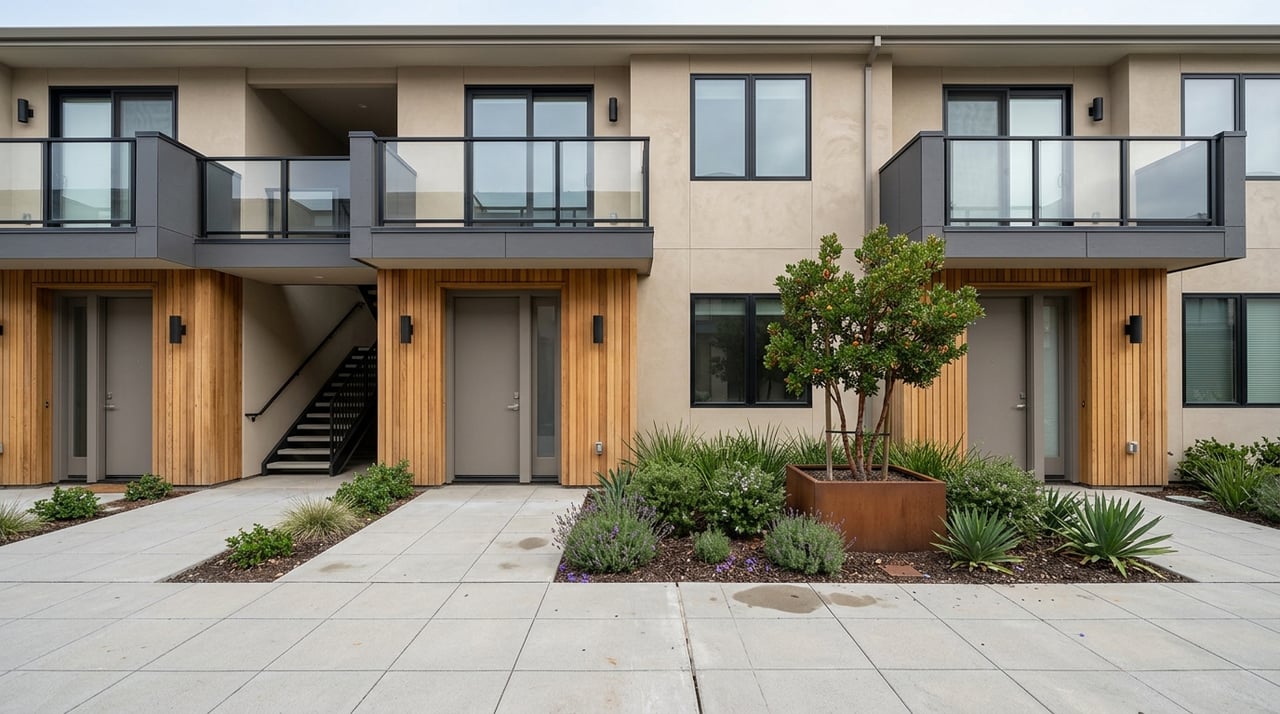
If you want Monterey living without the upkeep of a larger property, condos and townhomes can be a smart place to start. The challenge is that Monterey’s attached-home market is relatively small, prices can vary widely, and the real differences often show up in HOA structure, location, and long-term costs. This guide will help you sort through Monterey’s condo and townhome options with a clearer framework, so you can compare properties with more confidence. Let’s dive in.
Monterey attached-home market
Monterey’s condo and townhome inventory is limited, which can make every available property feel a little more important. According to Redfin’s Monterey condo market data, there are currently 24 condos for sale with a median listing price of $670,000 and 3 townhouses for sale with a median listing price of $1.1 million.
That small inventory sits inside a higher-cost overall market. The same Redfin data places Monterey’s broader median sale price at $855,000 in February 2026, which helps explain why attached homes often attract buyers looking for a more manageable entry point, a lower-maintenance lifestyle, or both.
It also helps to know that property type alone does not tell the whole pricing story. Recent Redfin sales data for Monterey show median sale prices of about $630,000 for condo/co-op homes and $1.42 million for townhouses, but those figures can shift based on location, views, parking, building condition, and project style.
Condo versus townhome basics
In Monterey, the choice between a condo and a townhome is often less about labels and more about how the property is owned and maintained. A condominium owner typically owns the interior unit and also holds an undivided interest in the common areas, according to the California Department of Real Estate guide to common-interest developments.
That same DRE guide notes that some features, such as patios, driveways, or parking spaces, may be classified as exclusive-use common area. In simple terms, you may have the right to use them, but the ownership and maintenance structure may still differ from what you would expect in a detached home.
Townhomes can also exist within common-interest developments, so you should not assume that a townhome means fewer shared obligations. The key question is not just what the home looks like from the street, but who is responsible for what.
Why HOA details matter
When you buy in a condo or townhome community, you are usually buying into a homeowners association as well. The California Attorney General’s HOA overview explains that HOAs enforce rules and guidelines for condominium buildings, planned communities, and subdivisions, and residents typically pay fees and assessments to support that work.
That means your monthly HOA dues are not just another line item. They are tied to how the project is run, how common areas are maintained, and how future repair costs may be handled.
The California DRE guide makes this especially important for buyers by pointing out that association documents should clarify responsibility for roofs, siding, landscaping, stairs, decks, parking, and shared amenities. If you are comparing two Monterey properties with similar list prices, the stronger value may come from the project with clearer maintenance responsibilities and healthier financials.
What Monterey HOA fees may cover
A monthly HOA fee can represent very different things from one property to the next. In one community, it may include exterior upkeep, landscaping, trash, water, insurance, or access to amenities. In another, it may cover only a narrower set of services.
The DRE’s common-interest development guide explains that HOA budgets are built from operating expenses, reserves, regular assessments, special assessments, fines, and user fees. For you as a buyer, the practical takeaway is simple: do not judge the fee by its size alone. Judge it by what it buys and whether the association appears financially prepared for future repairs.
A lower monthly HOA fee may look attractive at first glance, but it is not always the better deal. If the association is underfunded, you could face deferred maintenance or future assessments that change the true cost of ownership.
Model the full monthly cost
One of the easiest mistakes in attached-home buying is focusing too heavily on the mortgage payment and not enough on total ownership cost. The CFPB monthly payment worksheet recommends including property taxes, homeowners insurance, maintenance, improvements, utilities, and condo or HOA fees when estimating what a home will really cost each month.
That matters in Monterey, where HOA dues can materially affect affordability. Condo and townhome fees are usually not included in the mortgage payment itself, so they need to be evaluated separately as part of your budget.
If you are choosing between a lower-priced condo with a high HOA fee and a higher-priced townhome with a lower monthly fee, the better fit may come down to your cash flow, risk tolerance, and how much maintenance responsibility you want to carry personally.
Watch for reserves and assessments
In Monterey’s attached-home market, reserve strength deserves close attention. The California DRE consumer alert on underfunded HOAs warns that weak reserves can lead to deferred maintenance, disrepair, and special assessments that may reach the tens of thousands of dollars.
That is why a lower HOA fee should always trigger a second question: is the association keeping up with reality, or just delaying costs? Roofs, exterior paint, roads, decks, pools, and other shared components do not become less expensive because dues are low.
Before you move forward, it is worth reviewing the budget, reserve summary, financial statements, meeting minutes, insurance summary, and any history of special assessments. Those documents often tell you more about a project’s long-term health than the listing description ever will.
Lifestyle fit in Monterey
For many buyers, the appeal of a Monterey condo or townhome is not just price. It is lifestyle. Monterey is described by Redfin’s city profile as moderately walkable overall, with a Walk Score of 53, while nearby areas such as New Monterey and Del Monte Beach score 76 and 60.
That supports a different kind of ownership choice. If you want easier upkeep, shorter trips for daily errands, or less dependence on a large private yard, an attached home may line up well with how you actually want to live.
The city’s planning context reinforces that point. Monterey’s General Plan materials identify Downtown, East Downtown, Cannery Row/Lighthouse Avenue, and North Fremont as mixed-use areas designed to combine residences, retail, services, jobs, transit, bicycle routes, and pedestrian access.
Near-water and in-town convenience
If your goal is a lock-and-leave coastal lifestyle, location inside Monterey matters as much as unit size. The city’s Waterfront Master Plan notes that the Monterey Bay Recreation Trail runs from Seaside to Pacific Grove and serves as a major pedestrian and bicycle corridor along the waterfront.
That can make some attached-home locations especially appealing if you want easier access to the waterfront, trail use, or a more compact daily routine. It does not mean every condo near the coast is equal, but it does give you a useful lens for comparing convenience and lifestyle value.
Parking also deserves attention in this part of town. Monterey’s FY26 fee schedule includes a $20 annual resident discount decal that provides two hours free in the Downtown Garages, Waterfront Lot, and Cannery Row Garage. If guest parking or overflow parking matters to you, local parking structure can be part of the ownership equation.
Questions to ask before you buy
In a market like Monterey, a careful buyer usually wins by asking better questions early. These are some of the most useful ones to bring into your search and document review:
- What does the monthly HOA fee cover right now?
- How often have dues increased in recent years?
- Are reserves adequate for expected repairs and replacements?
- Has the HOA issued any special assessments recently?
- Who maintains roofs, decks, exterior walls, landscaping, and parking areas?
- Are there rules about pets, rentals, smoking, or guest parking?
- Does the location better support walkability, waterfront access, or a quieter residential setting?
The most important documents for these questions are the CC&Rs, bylaws, rules, budget, reserve study, financial statements, insurance summary, meeting minutes, and special-assessment history. According to guidance from the California Attorney General and the DRE, those materials help show what you are really buying into beyond the unit itself.
A smart way to compare options
When you tour Monterey condos and townhomes, it helps to compare them through a simple framework. Instead of focusing only on list price, try weighing each option across four categories: monthly cost, maintenance responsibility, HOA health, and daily convenience.
That approach can keep you from overvaluing cosmetic appeal while missing the bigger ownership picture. In a small, high-cost market, the right home is often the one that fits your routine, your risk tolerance, and your long-term budget with the fewest surprises.
A calm, structured review process matters here. If you want help comparing Monterey condo and townhome options, reviewing HOA questions, and building a search around the way you actually want to live, Mark Cohan can help you move forward with clarity.
FAQs
What is the difference between a condo and a townhome in Monterey?
- In Monterey, the practical difference often comes down to ownership and maintenance structure rather than appearance alone. A condo usually includes ownership of the unit plus an interest in common areas, while a townhome may still be part of an HOA with shared responsibilities.
What should Monterey buyers review in HOA documents?
- You should review the CC&Rs, bylaws, rules, current budget, reserve study or reserve summary, financial statements, insurance summary, meeting minutes, and any history of special assessments.
Are Monterey condo HOA fees included in the mortgage payment?
- Usually not. The CFPB notes that condo and HOA fees are typically separate from the mortgage payment, so you should include them in your monthly affordability analysis.
Why do Monterey condo and townhome prices vary so much?
- Recent local data suggest price differences are influenced heavily by location, views, parking, and project type, not just whether the property is labeled a condo or a townhome.
Are attached homes a good fit for walkable living in Monterey?
- They can be, especially in areas connected to mixed-use districts, downtown amenities, and the waterfront trail system. Monterey is moderately walkable overall, and some nearby areas score higher for walkability.
What is a special assessment in a Monterey HOA community?
- A special assessment is an extra charge levied by the HOA, often when reserves are not enough to cover major repairs or unexpected costs.
